
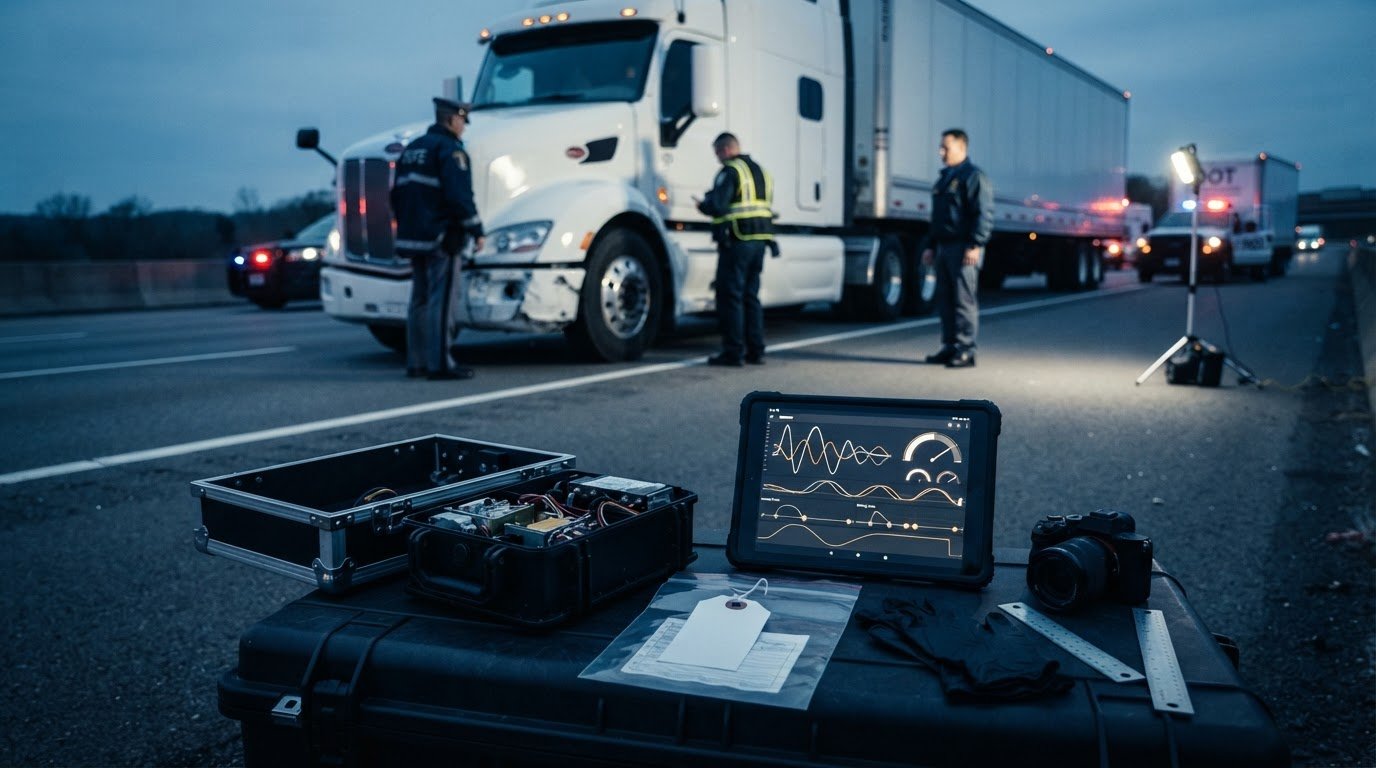
Black Box Data in a Truck Accident Case: What It Can, and Cannot, Show
What if a truck’s “black box” can help show what happened just before a crash, but still can’t explain why it happened? Black box data in a truck accident case may offer clues about speed, braking, engine activity, or a driver’s hours, yet no single record tells the whole story. It’s understandable to want clear answers from technical data, especially when details of a collision are disputed.
Understanding what each system records can help you see both the value and the limits of that evidence. This guide explains how an Event Data Recorder, an Electronic Control Module, and an Electronic Logging Device differ, and what information each may provide.
Timing and context also matter. Some crash-related data may be overwritten, and records need to be interpreted alongside other evidence rather than treated as a complete account. We’ll cover why prompt, appropriate preservation can matter, practical next steps, and where case-specific legal guidance fits in. This article is general information, not legal advice.
Key Takeaways
-
Learn why “black box” may refer to different truck systems, and why the records available can vary from one crash to another.
-
See how black box data in a truck accident case may help investigate specific questions, without treating a data point as proof of fault.
-
Understand what details to document and keep after a crash while seeking guidance on whether electronic records may need prompt preservation.
-
Find out what information can help prepare for a case evaluation, including crash details and records you already have, without delaying urgent care.
Table of Contents
-
What Does Black Box Data Mean in a Truck Accident Case?
-
What Can Black Box Data Reveal About a Truck Crash?
-
What Black Box Data Can, and Cannot, Prove in a Truck Accident Case
-
How Is Black Box Data Preserved and Reviewed After a Truck Crash?
-
When Should You Seek Legal Guidance About Truck Black Box Data?
What Does Black Box Data Mean in a Truck Accident Case?
“Black box” is an informal umbrella term, not the name of one standard truck device or a single, universal record. In a black box data in a truck accident case discussion, it may refer to electronic information from systems that capture vehicle events, engine operation, driver hours, location, or video. Which records exist depends on the truck’s equipment, what happened, how systems are configured, and how long the data is retained.
That distinction matters. An electronic record may help answer a particular question, but the label “black box” doesn’t tell you what information was collected or whether it still exists. Identifying the specific device and record is an essential first step in understanding what the data may show.
Which truck systems may hold electronic information?
An Event Data Recorder (EDR) is associated with recording vehicle information around certain crash events, if the truck has a system that captures it. An EDR overview can explain the general concept, but it doesn’t establish what a particular truck recorded. An Engine Control Module (ECM) manages engine functions and may contain data relevant to engine or vehicle operation; available fields vary by system.
Other records serve different purposes. An Electronic Logging Device (ELD) records a driver’s hours-of-service information, while telematics and GPS systems may contain location or fleet-operation records. A dashcam may capture video, and communication systems may retain messages or other activity. These sources aren’t interchangeable with EDR data, and their existence doesn’t guarantee that a specific detail was recorded.
Is every truck equipped with the same black box?
No. Trucks can differ in manufacturer, model, installed equipment, and fleet technology. Even systems with similar names may collect different fields or store information for different periods. A truck may have an EDR but not capture a particular event, or relevant information may be held in separate systems managed by the carrier or a technology provider.
For example, an EDR record, an ELD log, and GPS location history could each relate to a different part of a crash investigation. One concerns vehicle-event data, another driver-hours records, and another location information. None should be assumed to confirm the others without review.
The practical takeaway is to avoid assuming that every truck has one complete “black box” file. The specific devices, records, and retention practices must be identified for the vehicle and event in question. A system-by-system approach helps clarify what electronic evidence may be available and what it can reasonably contribute to the investigation.
What Can Black Box Data Reveal About a Truck Crash?
Electronic records may help investigators examine specific questions about a crash: how the truck was moving, what its systems registered, and how events may have unfolded over time. Possible records include speed, brake application, throttle position, engine activity, timestamps, GPS location, driver-hours logs, and camera footage. Availability depends on the system, truck model, and event.
These records can help build a timeline, but they don’t automatically explain the cause. A timestamped change in speed, for example, may help identify when a vehicle slowed, while location records may place it along a route. Those details still need to be checked against the system’s technical characteristics and other evidence.
Can truck data show speed, braking, or driver actions?
It may. Depending on the equipment and its configuration, event-related records can include vehicle speed, brake use, throttle input, or other operating information around a recorded event. The available fields and time period can vary. The federal regulations for EDRs provide regulatory context, but a rule for a particular vehicle category shouldn’t be taken as proof that a specific truck captured a specific field.
Recorded values also need careful interpretation. A speed reading may have technical limits, and a recorded brake signal doesn’t by itself show why the driver braked or whether the action was reasonable. In black box data in a truck accident case, one data point is a clue to assess alongside the circumstances, not a standalone finding of negligence or causation.
How do ELD, GPS, and dashcam records add context?
Separate systems can contribute different pieces of a timeline. ELD records concern driver-hours information; GPS or fleet telematics may show location or movement; and dashcam footage may capture a view of the roadway or cab, depending on camera placement and recording settings. Each has limits: location data may not show the driver’s actions, hours logs don’t establish what happened at the collision, and video may not capture every angle or moment.
Comparing sources can help test whether accounts fit together. For instance, a location record, a video timestamp, vehicle event data, physical evidence, and witness descriptions may each support or complicate a proposed sequence. Differences between records can also require explanation, such as varying clocks or recording intervals. The value comes from evaluating how each source was created and whether it aligns with the others.
For case-specific guidance about what records may matter, request a free MVA case evaluation and explore a possible attorney connection.
What Black Box Data Can, and Cannot, Prove in a Truck Accident Case
Electronic records can provide useful evidence, but a reading is not an automatic finding of fault. It may support or challenge part of an account of a crash, yet its significance depends on what the system recorded, how reliable the record is, and how it fits with other available evidence.
Electronic records may indicate They do not prove on their own
A vehicle’s recorded speed, braking input, or other system activity, if captured by the equipment That a driver acted negligently or that a particular action caused the collision
A sequence of system events or vehicle movement within the limits of the record A complete account of everything that happened before, during, and after the crash
Possible timing or location details from separate fleet, GPS, or video systems That records from different systems use identical clocks or capture the same events
Information that may support or conflict with an account from a witness or driver Which account is correct without further review and corroborating evidence
Why does black box data need corroboration?
Technical records need to be compared with broader crash evidence, such as vehicle damage, scene documentation, witness accounts, and available video. Each source has limits. A sensor may register a specific signal without explaining the circumstances behind it, while a camera may show only part of the scene. Clocks can be misaligned, event triggers may affect what is saved, and gaps or incomplete records can leave important questions unanswered.
No single source should automatically override the others. If a record appears inconsistent with physical evidence or a witness description, the difference needs careful examination. The method used to retrieve and interpret the data can also affect what conclusions are reasonable.
Can black box data determine who was at fault?
No. Black box data in a truck accident case may inform the factual analysis, but it doesn’t independently decide legal responsibility. A recorded speed or braking event, for example, must be considered alongside surrounding conditions and other evidence. Missing data also doesn’t, by itself, establish what happened or why a record is unavailable.
Responsibility depends on the full evidence and the applicable law. Legal standards and rules for using evidence can vary by jurisdiction, so the significance of a particular record calls for case-specific legal review. Treat electronic information as evidence to assess, not a verdict.
How Is Black Box Data Preserved and Reviewed After a Truck Crash?
Protecting potential evidence starts with practical steps, not with trying to access a truck’s systems. Focus first on safety and urgent needs. Afterward, keep records already in your possession and seek case-specific guidance about electronic data. Black box data in a truck accident case may be held by a carrier, vehicle owner, or technology provider, and some records may be subject to retention limits or routine system practices.
What should an injured person do to protect potential evidence?
Keep what you already have, such as photographs, crash-related documents, witness contact details, and messages or other communications about the incident. Write down the truck’s identifying details and the date, time, and location as you understand them. Separate what you personally observed from what someone else told you, and don’t guess about missing details.
Don’t attempt to download data, disconnect equipment, or alter anything on the truck. Avoid contacting the carrier to request or handle electronic records before getting guidance; informal steps may not preserve the underlying information. This is different from keeping your own documents and notes. For a broader checklist, see this guide to organizing evidence after a car crash.
Who may retrieve and interpret truck electronic records?
Collection depends on the type of device, who has custody or control of it, and the circumstances of the crash. EDR or ECM data, for example, may require specialized equipment and a process suited to that system. ELD, telematics, GPS, and video records may be stored or managed separately. A qualified technical reviewer can help identify the system, collect available records appropriately, and explain what the data can and can’t show.