
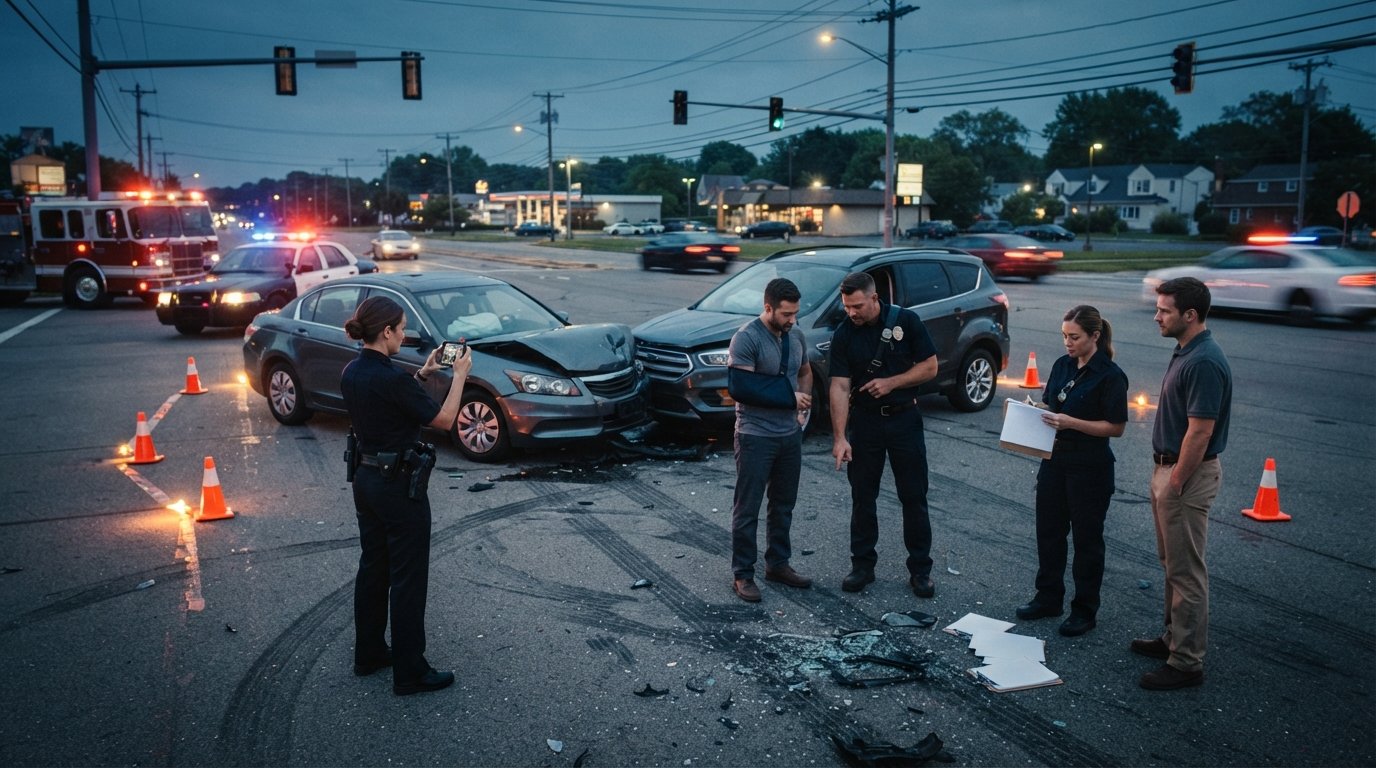
Crucial Evidence to Collect at an Accident Scene
Imagine standing on a busy roadside with your heart racing and your mind clouded by the sudden shock of a collision. In these first few minutes, the pressure to act is high, yet the confusion of the moment often leads to critical details being overlooked. It's completely natural to feel uncertain about exactly what information insurance companies or attorneys will require to validate your version of events. Knowing the specific evidence to collect at an accident scene is the most effective way to transform that initial chaos into a clear, organized foundation for your legal protection.
You likely want to ensure your rights are protected without feeling overwhelmed by the process, and we're here to provide that clarity. This article provides a methodical, step by step guide to gathering the essential documentation needed to simplify your path forward and provide much needed peace of mind. We will walk through a comprehensive checklist that covers everything from digital scene documentation to witness coordination, helping you move from the scene of the crash to a professional case evaluation with confidence.
Key Takeaways
-
Understand why the first hour following a collision is the most critical window for securing fleeting details that establish the facts of your claim.
-
Master the methodical "wide-to-narrow" photography technique to capture essential visual context, including road conditions and vehicle positioning.
-
Follow a comprehensive checklist of the evidence to collect at an accident scene, ensuring you identify all involved parties and vehicle owners correctly.
-
Learn how to approach neutral witnesses and secure objective external footage, such as dashcam recordings, to support your version of events.
-
Establish an organized system for your documentation to simplify the transition toward a professional case evaluation and legal recovery.
Table of Contents
-
The Importance of Immediate Evidence Collection
-
Visual Documentation: Capturing the Scene Methodically
-
Information Exchange: Identifying Involved Parties
-
Witnesses and External Evidence Sources
-
From the Scene to Legal Recovery: Next Steps
The Importance of Immediate Evidence Collection
Every traffic collision triggers a complex chain of events where the quality of your documentation determines the strength of your future claim. Think of the evidence to collect at an accident scene as the foundational facts of your legal recovery. While the immediate aftermath is high-stress, the first sixty minutes are the most critical for capturing "fleeting" evidence. Skid marks fade, weather changes, and vehicles are eventually cleared from the roadway. Acting quickly ensures that the objective reality of the crash is preserved before the environment changes.
Securing this information immediately also protects you against conflicting stories. It's common for drivers to change their accounts of the event once they've spoken to their insurance providers. Detailed documentation acts as a permanent record that prevents the other party from rewriting the narrative later. This level of preparation is essential for facilitating a free MVA case evaluation, as it allows professionals to assess the merits of your situation based on hard data rather than memory alone.
Why "Memory Fades but Evidence Remains"
High-stress situations trigger a physiological response that can significantly impair memory accuracy. Adrenaline and shock often make it difficult to recall precise sequences or vehicle positions later. Physical evidence serves as an objective, unwavering witness to the crash. It doesn't forget or misinterpret details. This is why it's vital to document the scene before any vehicles are moved. Once a car is towed or pulled to the shoulder, the story told by the resting positions and debris patterns is lost forever. Capturing these details on camera creates a reliable timeline that remains accurate long after the initial shock has passed.
The Legal Weight of Documented Proof
Attorneys rely heavily on scene evidence to establish liability and determine fault. Without clear photos or witness statements, a claim often devolves into "he said, she said" arguments. Strong documentation provides the leverage needed during settlement negotiations. Insurance adjusters are trained to prioritize contemporary documentation captured at the time of the event over statements provided days or weeks later. Comprehensive records minimize the chance of conflicting stories from other drivers gaining traction. By gathering the right evidence to collect at an accident scene, you're essentially building the framework for your legal protection before you even leave the roadside.
Visual Documentation: Capturing the Scene Methodically
Visual records provide an indisputable account of the crash that words alone cannot convey. When determining the evidence to collect at an accident scene, you should adopt a wide-to-narrow approach. This methodical technique begins with capturing the entire scene from a distance to establish the relative positions of all vehicles involved. Once the broad context is secured, you can move closer to document specific details. This method prevents the loss of perspective that occurs when you only take close-up shots of car dents, ensuring that investigators understand the full scope of the event.
Capturing peripheral details like skid marks and debris fields is vital. These markers often indicate where a driver attempted to brake or the exact point of impact. Similarly, photographing traffic signs and signals near the collision site helps clarify right-of-way rules and potential negligence. If it's safe to do so, record a video walk-through of the area. A video captures environmental factors like the volume of traffic or the timing of a light cycle, providing a sense of the "vibe" and atmosphere that static images might miss.
Step-by-Step Photography Checklist
To ensure your documentation is comprehensive, follow a structured approach. Capturing the right data points reduces the risk of insurance companies questioning the validity of your claim later. High-quality visuals are the most effective evidence to collect at an accident scene to prevent disputes.
-
Four-Sided Coverage: Photograph all four sides of every vehicle involved, not just the damaged areas.
-
Identification: Capture license plates and VIN numbers clearly for accurate vehicle identification.
-
Interior Details: Document the car's interior, including deployed airbags and the position of seatbelts.
Environmental and Contextual Evidence
The environment often tells the story of how the collision occurred. Documenting these factors helps establish whether external elements played a role in the crash. Having this visual proof ready makes it much easier to start a conversation about your recovery options.
-
Weather Factors: Take photos of sun glare, puddles, or icy patches on the road surface.
-
Visibility Issues: Document overgrown bushes, poorly placed signs, or construction barriers that may have obstructed a driver's view.
-
Resting Positions: Show where vehicles stopped relative to lane markings and intersections before they are moved.
Information Exchange: Identifying Involved Parties
While visual documentation captures the physics of the crash, the information exchange identifies the legal entities involved. This step is a vital component of the evidence to collect at an accident scene because it establishes who is financially and legally responsible for the damages. You should approach this process with a focus on accuracy and detail. If the driver is not the person listed on the vehicle's registration, it is essential to identify the vehicle owner as well. In many cases, the owner's insurance policy provides the primary coverage, making this distinction a critical factor in your eventual recovery.
Interactions at the scene can sometimes become tense, especially if the other party is uncooperative or lacks insurance. If a driver refuses to provide their details, don't engage in an argument. Instead, prioritize your safety and focus on documenting what you can see. Take a clear photograph of their license plate and vehicle identification number (VIN) from the dashboard. When law enforcement arrives, they can use these identifiers to pull the necessary records. Professionalism is your best tool in these moments; staying calm ensures that the exchange remains a utilitarian transfer of data rather than an emotional confrontation.
The Essential Data Checklist
To ensure you don't miss a critical detail during the stress of the moment, follow this structured list of data points. Having this information organized will simplify the process when you later share your findings with a professional for evaluation.
-
Personal Identity: Full name, current contact information, and the driver’s license number.
-
Insurance Details: The name of the insurance provider, the specific policy number, and the coverage expiration date.
-
Vehicle Specs: The make, model, year, and color of the vehicle, along with the license plate number and state of issue.
The "Silence is Golden" Rule
Maintaining a neutral demeanor is just as important as gathering physical data. It is a common instinct to say "I'm sorry" as a polite gesture, but in a legal context, this can be misinterpreted as an admission of fault. Conversations should be kept strictly limited to the exchange of essential information and checking for injuries. Avoid discussing the cause of the accident or who you believe is to blame with the other driver. Emotional statements made at the scene can unintentionally damage a future injury attorney claim by creating an impression of liability where none exists. By sticking to the facts, you ensure that the evidence to collect at an accident scene remains objective and supportive of your rights.
Witnesses and External Evidence Sources
While the drivers involved provide their own accounts, neutral third-party witnesses often offer the most credible perspective to investigators. These individuals have no financial stake in the outcome, making their observations highly valuable. When considering the evidence to collect at an accident scene, identifying these bystanders should be a priority. Approach them calmly and ask if they would be willing to share what they saw. Even if they believe they "didn't see much," their perspective on the traffic light color or vehicle speed just before the impact can be the deciding factor in a dispute.
In addition to human observers, "digital witnesses" such as dashcams provide an objective record of the event. If you have a dashcam, secure the footage immediately to prevent it from being overwritten. If you don't, look for other vehicles nearby that might have captured the collision. Many modern vehicles and commercial trucks are equipped with recording systems that can serve as definitive proof. You should also note the names and badge numbers of responding officers and request the police report number. This document is a formal record that attorneys and insurance adjusters will use as a primary reference point.
Request a free case evaluation to discuss your evidence
Gathering Witness Statements
Collecting witness information requires a methodical approach to ensure the data is usable later. If a bystander is willing, ask if you can record a brief statement on your phone. This preserves their immediate recollections before time or external influences alter their memory. It is also important to distinguish between passengers and neutral bystanders. While passenger statements are useful, insurance companies often view them as biased. Always prioritize contact details from people who were not inside the involved vehicles.