
Dram Shop Liability for DUI Accidents: Evidence and Claims
A DUI driver may not be the only party legally responsible for a crash. Dram shop liability for DUI accidents may apply when an alcohol business serves someone who later causes injury or death, and the person’s intoxication directly and foreseeably causes the crash and resulting harm. In Pennsylvania, a dram shop case generally must be filed within two years.
It’s natural to focus first on the driver whose choices led to the collision. But the circumstances of how that person was served alcohol may also matter. Evidence that the customer appeared visibly intoxicated can help show whether the business may be liable.
This guide explains how dram shop laws work, what evidence may support a claim, and how records and witness accounts can help establish what happened. It also covers Pennsylvania’s filing deadline and practical considerations that may shape a claim, so you can better understand what to consider after a DUI accident.
Key Takeaways
-
A dram shop claim may involve an alcohol-serving business as well as the driver, but state laws determine when the business can be held responsible.
-
Visible signs of intoxication, such as stumbling or slurred speech, may help show what staff could have observed before serving a patron.
-
Witness accounts, security video, and other records can help establish what happened at the business and connect it to the later crash.
-
Serving alcohol to a minor can create a separate basis for liability, with the specific rules varying by state.
-
In Pennsylvania, a dram shop case must be filed within two years, so identifying the relevant records and timeline early can matter.
Table of Contents
-
What Are Dram Shop Laws?
-
What Kind of Evidence Is Used in These Cases?
-
Evidence collection in dram shop cases
-
Pennsylvania dram shop claim deadline
-
Dram shop liability for DUI accidents
-
EMS Accident Cases: Connect MVA Victims With Attorneys
What Are Dram Shop Laws?
Dram shop laws can make alcohol businesses responsible for certain injuries caused by customers they served. A claim depends on the state’s rules and the connection between the alcohol service, the customer’s intoxication, and the resulting harm.
Penalties for Unlawful Alcohol Service
Unlawful alcohol service can bring criminal consequences and, in some places, civil liability. In California, Business and Professions Code section 25062(a) allows prosecutors to charge people who sell, furnish, or give alcohol to a visibly intoxicated person or habitual drunkard; the conduct may be a misdemeanor.
That rule matters because criminal charges and an injury claim are separate issues. California cities and towns may also enact ordinances that impose additional liability for serving alcohol to a minor, whether or not the minor is drunk. California does not extend civil liability to individual social hosts who serve impaired guests, except in cases involving minors.
Knowingly serving alcohol to a minor is an unlawful act for purposes of a dram shop claim. In California, an alcohol business may be held liable for crash damages when it sells alcohol to a visibly impaired minor. Local ordinances can also affect how a claim involving a minor is assessed.
Alcohol Vendor Liability
Alcohol vendor liability concerns claims against a business that sold or served alcohol to a customer who later caused injury. Dram shop statutes exist in most U.S. states, and California is one of 38 states with a dram shop law. Depending on state law, the business involved could be a bar, restaurant, liquor store, or another alcohol retailer.
A person injured in a drunk-driving crash may bring a civil case against both the driver and the alcohol vendor. The vendor claim concerns its alcohol service, while the driver remains responsible for the crash. Compensatory damages may be divided between defendants. Potential damages include medical costs, lost wages, future earning capacity, property damage, physical pain, and emotional suffering.
A court may also award punitive damages when an establishment’s conduct is particularly reckless. These are possible categories of damages, not automatic awards. The facts supporting liability and the losses connected to the injury shape what a claim seeks.
Alcohol Service and Accident Causation
Causation means showing how the alcohol service connects to the later accident and injury. A dram shop plaintiff must demonstrate that intoxication was a direct and foreseeable cause of the subsequent accident and injuries. So the claim involves more than showing that a business served the driver before the crash.
For example, the relevant sequence could include alcohol service, the customer’s resulting intoxication, and a DUI collision that causes injury. The plaintiff must connect those events, rather than rely on timing alone. This relationship matters when assessing whether the driver’s intoxication links the vendor’s conduct to the claimed harm.
In New York, a dram shop case may require evidence that an establishment served an intoxicated driver who caused a car accident. In Pennsylvania, a licensed establishment may be held responsible for serving someone who was already intoxicated and later left the premises. State rules determine the connection a claim must establish.
Differences in State Dram Shop Laws
Dram shop statutes have been enacted in most U.S. states, but their requirements differ. California is one of 38 states with a dram shop law, while New York law can allow injured people to pursue a claim against a business that serves a visibly intoxicated person who later causes a crash. Pennsylvania treats serving an already intoxicated person as negligence per se for dram shop liability.
These differences can affect which businesses face claims and what facts matter. Pennsylvania’s rule concerns service to an already intoxicated customer who later leaves the licensed establishment. New York cases focus on service to a visibly intoxicated person who later causes injury. California’s rules also address sales to visibly impaired minors.
Location matters because the applicable state law sets the framework for a claim. If you were injured in a DUI crash, identify where the alcohol was served and where the collision occurred. Those details help clarify which state’s dram shop rules may govern the case.
What Kind of Evidence Is Used in These Cases?
An injured person generally must show that an establishment served a visibly intoxicated patron and that the intoxication caused the injury. In Pennsylvania, evidence may also show that the patron displayed recognizable signs of intoxication before service.
Evidence of Visible Intoxication
Evidence of visible intoxication consists of observations indicating that a patron appeared impaired when alcohol was served. This matters because a business’s potential responsibility can depend on what its staff could observe at the time.
In Pennsylvania, relevant signs include slurred speech, bloodshot eyes, stumbling, and loud, boisterous speech. A witness might describe a customer struggling to walk from a restaurant table or speaking unclearly while ordering another drink. Specific observations help establish how the patron appeared before leaving.
Separate accounts can clarify the timeline. A server may recall an unsteady customer, while another patron remembers the customer raising their voice. Police observations after a DUI crash can add context, though they describe the driver later, not necessarily at the establishment.
For a visibly intoxicated minor, evidence must help establish both the person’s age and the alcohol service. In California, an alcohol business may be held liable for DUI crash damages when it sells alcohol to a visibly impaired minor. Evidence of the minor’s age, purchase, and visible condition may therefore matter to the claim.
Proving a Dram Shop Claim
To prove a dram shop claim, the plaintiff must establish unlawful or qualifying alcohol service, the patron’s intoxication, and a connection between that intoxication and the injury. These elements distinguish a claim against a serving business from one based only on the driver’s conduct.
Evidence should support the sequence, not just one isolated detail. For example, a witness who saw a patron stumbling before leaving may help describe the patron’s condition. Crash records can then help connect the driver to the later collision and resulting injury.
Claims involving minors require particular attention to age and service. Knowingly serving alcohol to a minor is an unlawful act for a dram shop claim. In California, local ordinances may impose additional liability for serving any minor, whether or not the minor is drunk.
Evidence can also help distinguish the driver’s responsibility from the vendor’s. A receipt may identify a transaction, while a witness account may describe the customer’s behavior. Along with evidence of the crash and injury, these details can help explain what happened before and after service.
If you’re sorting through evidence after a DUI crash, connect with an attorney about your potential claim.
Evidence collection in dram shop cases
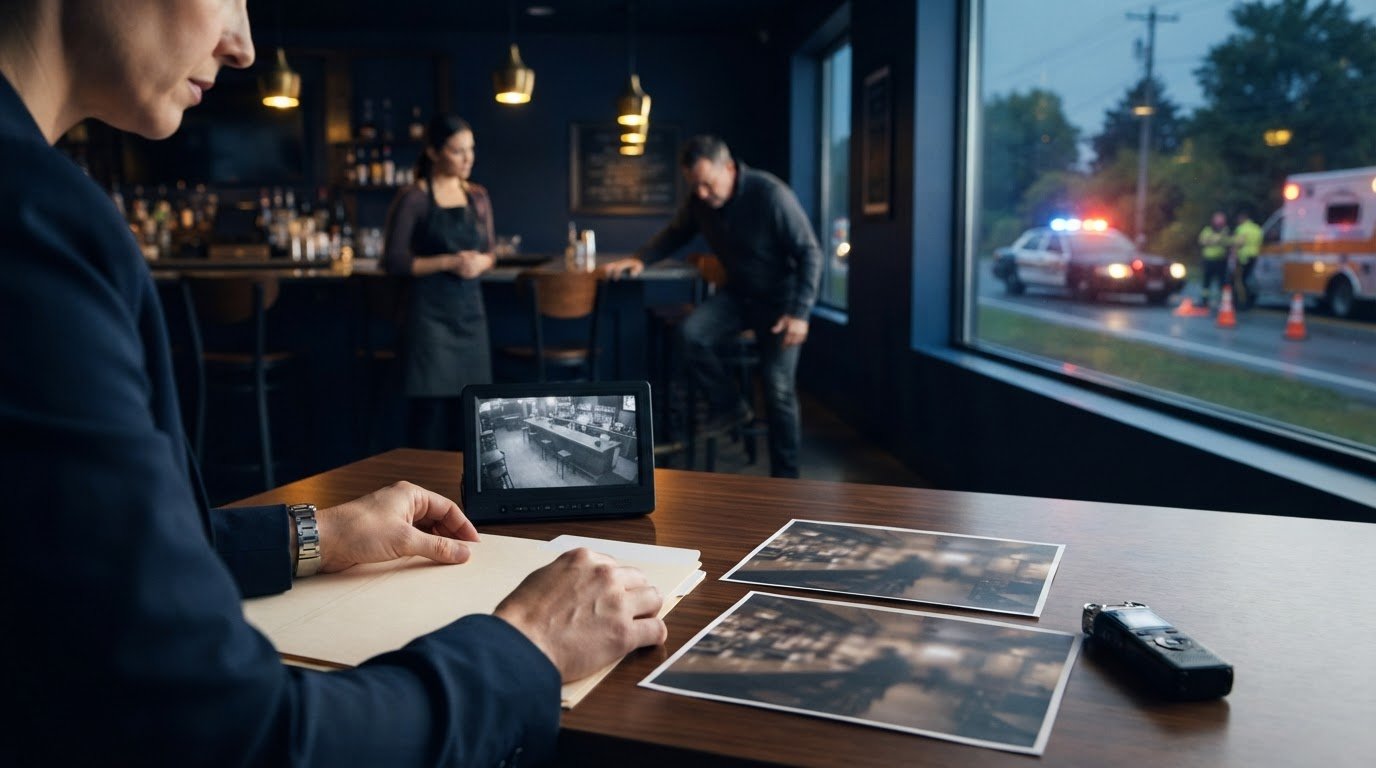
Collecting evidence helps build a timeline linking alcohol service, the customer’s departure, and the later crash. In New York dram shop investigations, security video, witness accounts, and other evidence may help establish what happened at the establishment.
Start by recording the business name, location, and approximate time of the visit. Note who was present, what each person observed, and how to reach them. A written account made soon after the event can help separate direct observations from details learned later. Keep separate notes for the establishment and crash locations.
Security footage may show a customer’s arrival, interactions, purchases, and departure. Note which areas cameras might cover, such as an entrance, bar, checkout counter, or parking area, and record the date and time range that would capture the visit. Footage can provide context, but compare it with witness recollections and other records.
Witness information is most useful when specific. Ask each person what they saw and when, rather than trying to create a shared account. A companion may recall the customer’s arrival, while a nearby patron may remember the departure. Record each witness’s name and contact details, and keep their accounts separate.
-
Record the establishment’s name, address, and visit details.
-
List potential witnesses and the parts of the visit they observed.
-
Preserve relevant messages, photographs, receipts, and personal notes.
-
Keep a separate timeline for the crash and resulting injury.
These steps help organize evidence without assuming that one record proves the entire claim. For example, a receipt may show a purchase, but not necessarily the customer’s visible condition. A witness account may describe behavior, while crash documentation helps place the later collision in the sequence.
Keep original files and documents in their existing form when possible. For digital photographs or messages, retain the original and note who created or received it. Label copies with the date and source. This organization makes it easier to distinguish firsthand evidence from summaries or later recollections.
Finally, compare the timeline across sources. If a witness recalls a departure before a receipt’s timestamp, note the difference rather than changing either record. Dram shop laws depend on the facts and applicable state rules, so clear organization can help an attorney assess whether the evidence supports negligent alcohol service and a connection to the crash.