
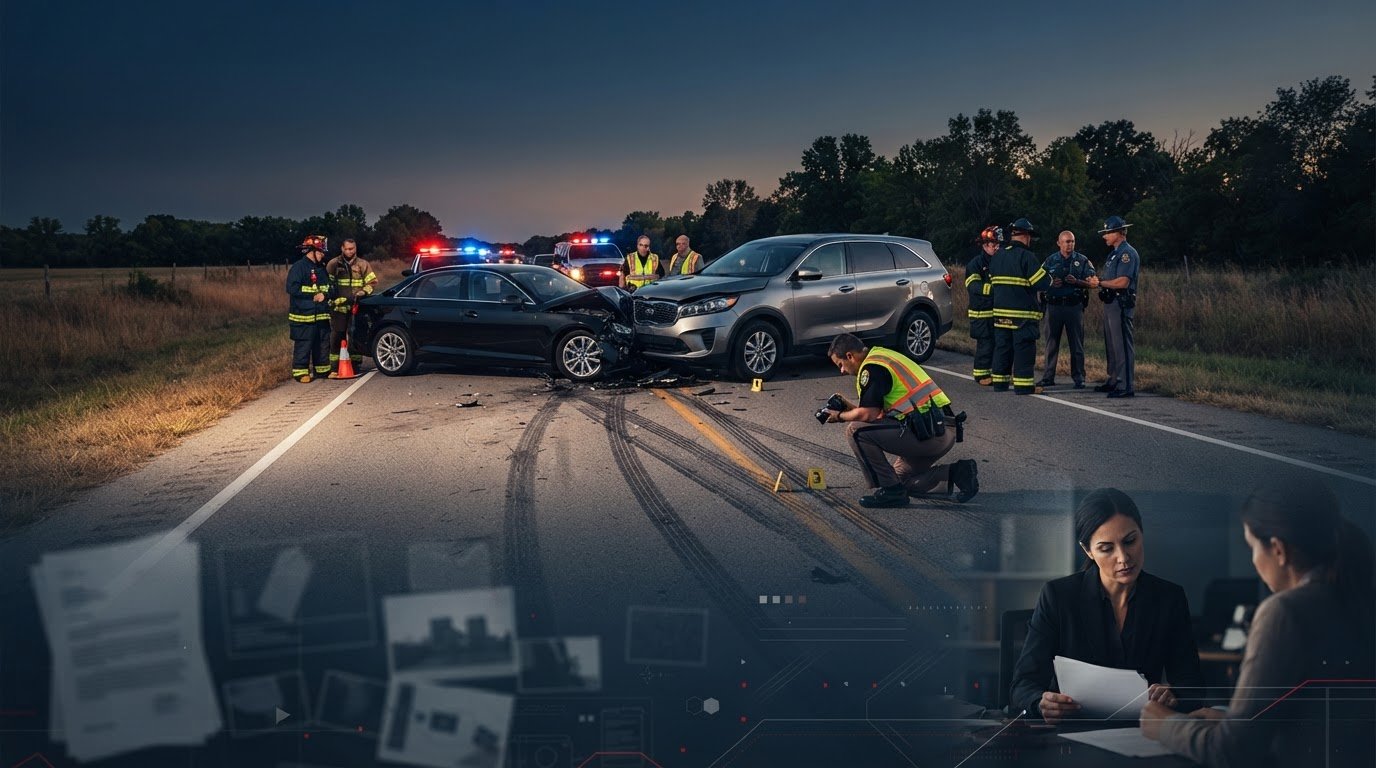
Head-On Collision Liability: How Fault Is Determined in 2026
A head-on impact may show that two vehicles met in the same path, but it doesn’t automatically prove who was legally responsible. That distinction matters when drivers give different accounts or when road conditions and evasive actions may have contributed. Head-on collision liability is assessed by looking beyond the point of impact to the evidence and circumstances that led to the crash.
It’s understandable to wonder how police, insurers, or a court will sort through conflicting statements, and whether shared fault could affect a potential claim. This guide explains what different evidence may show, including vehicle positions, roadway markings, witness accounts, photographs, police reports, and vehicle data. It also explains how state rules on shared fault may affect recovery. The applicable law depends on where the collision occurred.
You’ll find practical steps for preserving relevant evidence and questions to consider when reviewing a liability decision. If important facts are disputed, discussing the circumstances with an attorney may help you understand your options. EMS Accident Cases connects motor vehicle accident victims with attorneys and offers a free MVA case evaluation, along with legal information to help you consider a possible next step.
Key Takeaways
-
A head-on impact alone doesn’t establish who is legally responsible. The surrounding facts and applicable law matter.
-
Different evidence sources may help explain what happened, but conflicting or incomplete records can affect a head-on collision liability assessment.
-
Shared-fault rules vary by state, so an insurer’s decision may depend on both the evidence and local law.
-
Prioritize emergency care. When it’s safe, keep relevant records and note your recollection.
-
Disputed fault, serious injuries, or disagreement with an insurer may be reasons to explore whether a legal review could clarify your options.
Table of Contents
-
What Head-On Collision Liability Means, and Why Impact Alone Does Not Prove Fault
-
How Investigators Assess Fault After a Head-On Collision
-
Shared Fault and Insurance Decisions: What Can Change a Liability Assessment?
-
Head-On Collision: Preserve Evidence and Stay Organized
-
When to Seek a Legal Review of Head-On Collision Liability
What Head-On Collision Liability Means, and Why Impact Alone Does Not Prove Fault
A head-on crash can leave drivers and families with sharply different accounts of how the vehicles entered the same path. The damage may show where the vehicles met, but it doesn’t always explain what happened beforehand. Head-on collisions describe crashes in which the front ends of vehicles traveling toward one another meet. That description alone is not a legal finding about responsibility.
Collision description versus liability finding: A head-on collision describes the direction of impact. Head-on collision liability is a determination of legal responsibility based on applicable law and available evidence.
Vehicle positions and impact direction can be relevant, but they don’t by themselves establish which driver acted negligently. The assessment may depend on state law, the evidence, the injuries and losses claimed, and the insurance arrangements involved. These factors can shape how a claim is evaluated, but not every liability question is decided by an insurer.
How negligence relates to head-on collision liability
In many claims, negligence is considered through four basic questions: Did a person have a duty to act with reasonable care? Did they fail to meet that duty? Did the failure contribute to the crash? Did it cause legally recognized harm? The exact standards and how they apply depend on the law governing the case.
For example, imagine one vehicle is found across the center line after a crash, while the drivers disagree about whether it drifted, swerved to avoid something, or was forced off course. Investigators may compare the accounts with road and vehicle evidence to assess what actions contributed. Neither the impact pattern nor one driver’s recollection automatically settles every part of the negligence analysis.
A traffic citation or an initial police report may provide relevant information, but it isn’t necessarily the final civil liability decision. An insurer or court may consider additional evidence and apply legal standards that differ from the purpose of a traffic enforcement decision.
Why more than one person or factor may be involved
Responsibility may be attributed to one driver, shared under applicable law, or remain disputed while evidence is reviewed. Investigators may examine driver actions alongside road conditions, visibility, signs or lane markings, and possible vehicle problems. A factor matters only if the evidence supports a connection to the collision and the applicable law allows it to affect responsibility.
In some circumstances, evidence may raise questions about another person’s or entity’s role, such as whether a road condition contributed. That possibility doesn’t establish that another party is responsible. It requires case-specific investigation. The next step is to understand what evidence investigators and insurers use to assess competing accounts.
How Investigators Assess Fault After a Head-On Collision
Investigators and insurers build a timeline from available records rather than relying on a single account or clue. Each source can help answer a different question: where the vehicles traveled, what drivers or witnesses observed, and whether roadway or vehicle conditions may have contributed. Evidence may be incomplete, inconsistent, or open to interpretation, so conclusions can change as information is compared.
What crash reports, photographs, and witness accounts can show
A crash report may document an officer’s observations, driver and witness statements, a scene diagram, and any cited violations. It can help organize the initial facts, but may not capture everything that happened before impact. Consider a citation or report entry in context rather than treating it as the only basis for deciding liability.
Photographs and video, if available, can show vehicle positions, damage, debris, road markings, signs, visibility, and surrounding conditions. Their usefulness may depend on when they were taken and whether the scene had changed. Witness accounts can add another perspective, but distance, sightlines, and the time between the event and an interview may affect what a person recalls.
How vehicle data and expert analysis may contribute
An event data recorder may hold information relevant to vehicle operation around a crash, depending on the vehicle and the data available. Access and use are subject to applicable law. A vehicle inspection may help assess a suspected mechanical problem. Reconstruction or other expert analysis may be considered when the evidence is complex or accounts remain disputed.
Roadway conditions deserve attention too. The Federal Highway Administration’s Roadway Departure Safety resource discusses strategies related to roadway departure crashes, including factors connected to road design. Its general guidance doesn’t determine what caused a particular collision, but it can help explain why investigators may look beyond driver actions.
In practice, investigators compare crash-report observations, scene images, physical damage, witness accounts, available vehicle data, and inspection findings. They look for details that corroborate one another and identify gaps or conflicts. Timing matters. Photographs taken before vehicles or debris are moved may document different conditions than later images, and records may become harder to obtain or interpret as time passes. Preserve what you already have and note when and where it came from. Don’t put yourself at risk to collect evidence.
These sources inform a head-on collision liability assessment, but none necessarily provides a complete answer on its own. If evidence conflicts or you’re unsure how it may be viewed, you can explore a free MVA case evaluation and possible connection with an attorney through EMS Accident Cases.
Shared Fault and Insurance Decisions: What Can Change a Liability Assessment?
A claim may begin with one driver accused of crossing the center line, but further evidence can complicate that account. Drivers may disagree about what happened, or information about visibility, road conditions, or vehicle operation may raise questions about whether responsibility was shared. An insurer’s assessment is one view of the evidence, not necessarily a final court determination.
SituationEvidence questionsPoints for state-specific review
One driver is alleged to have entered the opposing lane. Do photographs, witness accounts, vehicle data, or other records support the timeline? How does local law treat the alleged conduct and resulting harm?
Drivers give conflicting accounts. Which details are independently corroborated, and what information is missing? What rules and procedures apply to evaluating the evidence?
Evidence suggests more than one contributing factor. Did driver actions, road conditions, visibility, or a vehicle issue contribute? Can fault be allocated, and how could that affect a claim?
How comparative fault rules may affect a claim
Comparative fault is a way of assessing whether an injured person’s own conduct contributed to an incident and, where the law allows, how that responsibility affects recovery. It is not itself a final decision about who caused a crash. States use different approaches. Some allow recovery reduced by a person’s share of fault, while modified systems may bar recovery at a specified threshold. A few jurisdictions use contributory negligence rules that can have different effects. The governing law determines eligibility and any reduction, so confirm the rules with a qualified attorney.
For head-on collision liability, a disputed percentage can matter, but the applicable standard and its effect cannot be determined from the crash type alone. The location and circumstances of the collision may shape which law applies.
Why insurance assessments and legal liability can differ
An insurer reviews the available information to assess coverage and potential claim exposure under the applicable policy and law. Its position may change if new records or a clearer account emerge, and the other party may dispute its conclusions. A settlement offer, adjuster’s statement, or traffic citation shouldn’t be treated as a conclusive legal finding.
The National Transportation Safety Board has formal procedures for investigations within its remit, set out in the official NTSB investigation procedures. Those procedures concern NTSB investigations. They do not by themselves determine liability in an individual insurance claim or civil case. If fault is contested, ask what evidence supports the insurer’s position, what remains uncertain, and which state-specific rules may apply.
Head-On Collision: Preserve Evidence and Stay Organized
Safety comes first. Call emergency services when needed and seek medical attention for injuries or possible symptoms. Don’t delay urgent care to take photographs, speak with witnesses, or collect documents. Once you’re safe, a few organized steps can help preserve information that may later matter to a head-on collision liability review.
A practical evidence checklist after the crash
Gather what you can safely access, and keep originals unchanged. A dated folder, whether digital or paper, can help you track what each item is and when you received it.
- Save scene materials: Keep existing photographs or videos, witness names and contact details, the crash report number, and any report copies you receive.