
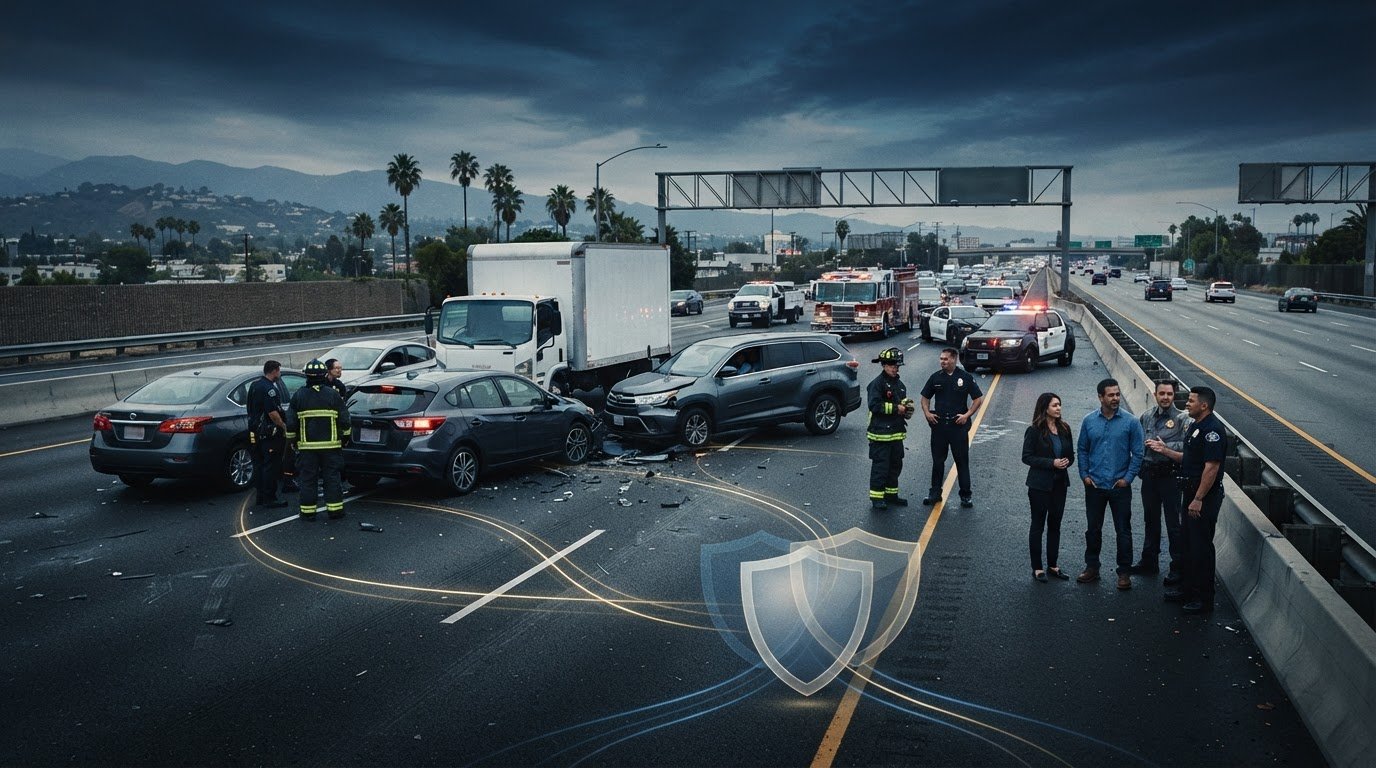
Multi-car pile-up insurance claims: Who pays what
In California, an injured person generally has two years from the accident date to file a personal injury lawsuit, according to California Legislative Information. The deadline to notify an insurer or submit a claim is separate and depends on the policy. In the multi-car pile-up insurance claim process, identifying potentially responsible drivers and the policies that may apply can shape how you pursue compensation.
When several vehicles and insurers are involved, it is natural to want a clear answer about who pays. Fault may be shared, and evidence helps establish each driver’s role and how responsibility is divided.
This guide explains filing deadlines, how California’s shared-fault rule can affect recovery, who may be liable, and how multiple insurance policies can factor into a claim. It also covers potential compensation and why pile-up claims may require careful investigation.
Key Takeaways
-
Separate the deadline for filing a lawsuit from your insurer’s policy deadlines for notice and claims.
-
Understand how shared fault can reduce compensation under California’s comparative fault rules.
-
Identify which drivers or other parties may have contributed to the crash and what evidence can help show their roles.
-
See how multiple insurance policies may affect which claims can cover your losses.
-
Learn which types of losses, including medical expenses, lost wages, and vehicle damage, may be considered for compensation.
Table of Contents
-
Multi-Vehicle Pileup Accidents in California: Who Pays When Everyone's Involved?
-
Potentially liable drivers, trucking companies, government entities, and manufacturers
-
What Compensation Can You Recover?
-
What Happens When Multiple Drivers Share Liability?
-
Multiple liable parties and insurance policies
-
EMS Accident Cases: Connect MVA Victims With Attorneys
Multi-Vehicle Pileup Accidents in California: Who Pays When Everyone's Involved?
After a multi-vehicle pileup, payment depends on fault, available insurance, and documented losses. State minimum property damage liability coverage varies by jurisdiction, and navigating these requirements often requires the guidance of EMS Accident Cases to ensure your losses are properly represented.
Collecting Crash Evidence
Crash evidence can include photographs, video, driver details, witness accounts, and collision-related records. Collecting it helps preserve a clear record before vehicles and physical traces are moved or repaired.
When it is safe, photograph each vehicle’s position and visible damage, along with license plates and nearby traffic signs or signals. Save dashcam footage, request contact and insurance details from the drivers involved, and keep medical records and witness names with your crash photographs. Insurers can use these materials to compare accounts with evidence from the scene.
Reconstructing the Collision
Crash reconstruction uses scene evidence to explain the sequence of impacts and how the vehicles collided. This matters because an initial impact may cause other drivers to brake, swerve, or hit another vehicle.
Investigators may compare damage patterns, photographs, traffic camera footage, dashcam video, witness statements, and police reports. For example, damage may help show the direction from which a vehicle was struck. A police report can support an insurance claim, but it does not conclusively establish fault. Comparing several sources can reveal where accounts agree or conflict.
Establishing Liability Through Evidence
Liability evidence links a driver’s actions to the collision and resulting injuries or damage. In a chain-reaction crash, investigators may assess each impact separately rather than assume every driver shares equal responsibility.
Driving records, witness statements, photographs, medical records, and expert reconstruction opinions can help establish what happened. The evidence may show whether a driver contributed to one impact, several impacts, or none. If an insurer assigns you fault or makes an offer that overlooks evidence, request its reasoning in writing. Then provide relevant photographs, witness details, or records and explain what they support.
Filing a Multi-Car Insurance Claim
To start a claim, notify your insurer, provide the collision details, and share available evidence and other drivers’ insurance information. Deadlines for accident notices and claims depend on the policy, so report the crash promptly and keep copies of messages and documents.
Ask for a claim number and record each insurer’s requests, dates, and responses. If several vehicles sustained damage, keep photographs and repair estimates organized by vehicle. Minimum property damage liability coverage applies to property damage, not bodily injury. In a pileup, standard policy limits may not cover every person’s losses, so the available policies and established fault matter when insurers assess payment.
Potentially liable drivers, trucking companies, government entities, and manufacturers
A pileup may involve several potentially responsible parties, not just the driver who struck your vehicle. In California, investigators may assess each driver’s actions and whether another person or entity contributed to the collision. Evidence must link that conduct to the crash and resulting personal injury or property damage.
For example, one driver may cause the initial impact while another contributes to a later collision. A truck’s role may also merit investigation. Investigators can review vehicle damage, witness accounts, footage, and crash reconstruction to understand each impact. A trucking company may be considered if evidence links its conduct to the crash. What matters is the evidence of each party’s contribution, not simply the number of vehicles involved.
Investigators may examine a manufacturer’s role if evidence suggests a vehicle or component defect contributed to the crash or injuries. They can compare the damaged part, vehicle condition, and collision sequence. A vehicle failure during a pileup does not by itself establish a defect. Evidence must help show whether the part’s condition played a role alongside the drivers’ actions.
Road conditions and public property may also be relevant. If a California government entity may have contributed to an injury, a government claim deadline applies: the claim must be filed within six months of the injury. After a California government tort claim is rejected, the claimant has six months to file suit. This differs from an ordinary claim against a driver, so identifying a government connection can affect the timeline.
California follows pure comparative negligence. An injured person’s compensation is reduced by their share of fault, but partial responsibility does not automatically prevent recovery. For example, a person found 20 percent at fault with a $100,000 award would receive $80,000. Even a person assigned 99 percent fault may recover the remaining 1 percent. In a case with multiple defendants, each defendant is responsible only for their proportionate share of non-economic damages under California Civil Code section 1431.2.
Wisconsin uses a different comparative negligence rule. An injured person cannot recover if found 51 percent or more at fault. If the claimant’s share stays below that threshold, compensation is reduced by that percentage. These state rules show why the location of the crash and each party’s assigned fault can change the result. If several actors may have contributed, discussing the accident claim can help clarify what questions the evidence raises.
What Compensation Can You Recover?
A pileup claim may cover injury-related losses and vehicle damage. Records supporting each loss help show what compensation you are seeking.
Injury and Property Damage Compensation
Compensation for injuries may include medical bills, lost wages, future care costs, and pain and suffering. Property damage may include the cost of repairing or replacing a damaged vehicle.
Keep medical bills with records of missed work and recommended future care. Save repair estimates, photographs, and receipts for damaged property. A witness’s account of the collision may help investigators connect the crash to the losses claimed. These records give insurers specific items to assess rather than one unsupported total.
Calculating Economic and Non-Economic Damages
Economic damages are financial losses, including medical expenses, lost wages, future care, and property damage. Non-economic damages address harms such as pain and suffering.
Organize economic losses by grouping bills, wage records, care estimates, and vehicle documents by category. For example, match each medical bill to the treatment record describing the care. A future-care estimate should explain the expected service and its connection to the injury. Pain and suffering is not listed on a bill, so descriptions of how an injury affects daily activities can provide relevant context.
A clear calculation separates past expenses from expected future losses. Keep an ongoing record of medical appointments, time away from work, and vehicle repairs. If treatment continues, later records may clarify future care needs. Avoid counting the same expense twice, such as listing a repair charge under both vehicle damage and out-of-pocket costs. An organized claim shows how each amount relates to the pileup.
Police reports, witness statements, and medical records can help an insurer investigate how the collision caused an injury. They do not replace bills or wage documentation, but may help connect the crash to the claimed losses. A witness account, for example, may clarify the impact sequence, while a treatment record documents care afterward. Keep these materials with the related expense records so the insurer can review them together.
Damages may exceed one at-fault driver’s policy limit, especially if a pileup involves several injured people or substantial vehicle damage. The amount available depends on the applicable coverage and claims against it. If one policy cannot cover all claimed losses, the remainder does not automatically disappear, but payment depends on other applicable policies and established liability. Track each insurer’s position and the losses that remain unpaid.
Before accepting a settlement, compare its written terms with the losses documented in your claim. Check whether it addresses medical expenses, wage losses, future care, vehicle damage, and pain and suffering. If an offer leaves out records or categories of damage, identify the specific omission and provide supporting documents. Because a settlement can affect which losses remain in dispute, review its scope against your records.
What Happens When Multiple Drivers Share Liability?
Insurers assess each driver’s contribution and review claims against the coverage that may apply. If an at-fault driver is uninsured, California policies must offer uninsured and underinsured motorist coverage, which policyholders may decline in writing.
Determining Shared Liability
Shared liability means that more than one driver’s actions contributed to the crash. Each insurer reviews evidence and statements to assess its policyholder’s role.
One driver, for example, may cause the initial impact while another contributes to a later collision. Investigators can compare drivers’ accounts with police reports, photographs, footage, and vehicle damage. This evidence helps distinguish drivers who caused an impact from those who could not avoid it. The fault assessment affects how insurers evaluate an injured person’s claim.
Claims Against Multiple At-Fault Drivers
A claim involving multiple at-fault drivers may require separate reviews of each driver’s actions and insurance coverage. This matters because one policy may not address every party’s share of the losses.