
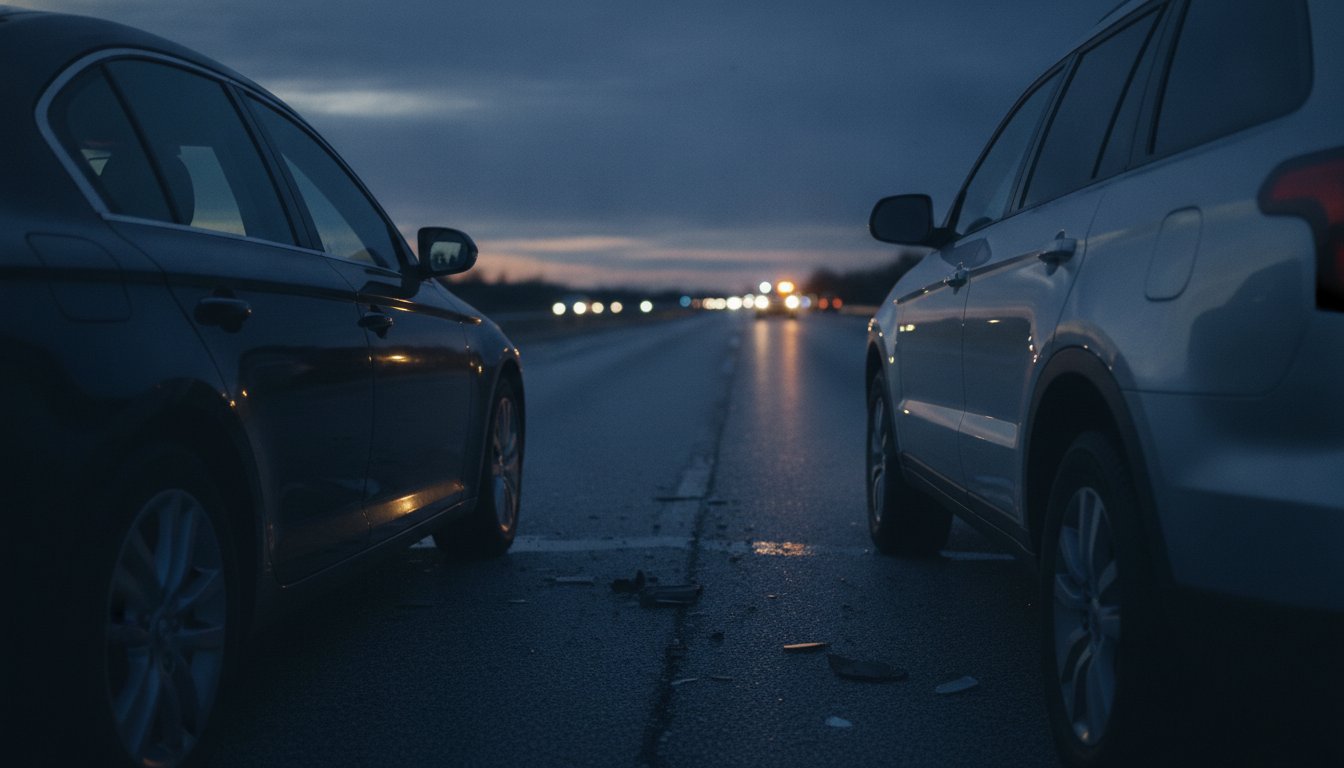
Sideswipe Car Accident Guide: Liability, Claims, and Legal Recovery in 2026
Did you know that a sideswipe car accident accounts for over 9% of all traffic collisions in the United States? It's a startling figure that represents thousands of drivers who find themselves sidelined by a sudden, jarring impact. You likely feel overwhelmed by the immediate aftermath, especially when the other driver claims they didn't see you or insists you were the one who drifted. It's common to feel that the truth of the incident is buried under conflicting statements and insurance company jargon.
We understand that proving lane-change negligence is often a complex uphill battle. This guide provides a methodical framework to help you address these challenges with expert insights on determining fault and identifying hidden vehicle damage that often goes unnoticed. We will explore the updated 2026 liability rules, detail the essential evidence needed for your claim, and explain how a professional case review can simplify your path to recovery.
Key Takeaways
-
Learn why liability in a sideswipe car accident is rarely automatic and how the "Right of Way" principle identifies the driver responsible for the collision.
-
Understand how comparative negligence rules can influence your total financial recovery if both parties are found partially at fault.
-
Identify the role of mechanical failures and environmental factors, such as hydroplaning, in causing sudden and involuntary lane departures.
-
Discover why securing a police report is a vital step in providing objective evidence for claims where the sequence of events is disputed.
-
Learn how a free MVA case evaluation serves as an essential tool for navigating the 2026 legal landscape and securing professional legal support.
Table of Contents
-
What is a Sideswipe Car Accident and Why is Liability Tricky?
-
Determining Liability: Who is at Fault in a Sideswipe Collision?
-
Critical Steps to Take After a Sideswipe Accident
-
How a Professional Case Evaluation Simplifies Your Legal Recovery
-
Securing Your Path to Recovery
What is a Sideswipe Car Accident and Why is Liability Tricky?
A sideswipe car accident is a collision between parallel vehicles often involving lane-change errors. This specific type of side collision occurs when the flank of one vehicle strikes the side of another while they are traveling in the same or opposite directions. Unlike rear-end accidents, where fault is typically assigned to the following driver, sideswipe incidents present unique challenges. Liability is rarely automatic because it's often difficult to determine which vehicle crossed the lane marker first without objective evidence.
There is a persistent myth that a "glancing blow" is a minor event. While the initial impact might seem like a simple paint scrape, even slight contact at high speeds can disrupt a vehicle's stability, leading to a total loss of control or a multi-car pileup. In 2026, the complexity of these accidents has increased due to the sensitive electronics housed within vehicle doors and fenders. What looks like a small dent can result in significant internal damage to safety sensors and structural components that aren't immediately visible.
Common Scenarios for Sideswipe Collisions
Most sideswipe incidents stem from a failure to maintain a single lane of travel. These accidents frequently occur during routine maneuvers where a driver's attention might lapse. Common situations include:
-
Highway Merging: Drivers entering a highway may fail to yield to existing traffic or miscalculate the gap between approaching vehicles.
-
Distracted Drifting: A driver using a mobile device or adjusting dashboard technology may unintentionally veer into an adjacent lane.
-
The Center Lane Squeeze: This occurs when two drivers in outer lanes both attempt to merge into the middle lane at the same time.
The Role of Blind Spots in 2026 Vehicle Safety
Modern safety technology has fundamentally changed how we evaluate negligence in these cases. Blind spot monitoring systems are now prevalent, and a driver's failure to heed these vehicle alerts is often viewed as a clear sign of negligence in 2026. If a car’s safety system warns of an obstacle and the driver ignores it, they've likely breached their duty of care. For those driving older vehicles without these technological aids, the evidentiary standards remain more traditional. These cases often require a methodical collection of witness testimony and physical evidence to prove that a driver failed to perform a manual shoulder check before moving. Proving fault requires a bridge between the physical facts of the crash and the applicable traffic laws.
Determining Liability: Who is at Fault in a Sideswipe Collision?
The core principle governing liability in these cases is the "Right of Way." Under standard traffic laws, the driver who maintains their established lane has the priority. When a sideswipe car accident occurs, the responsibility typically rests on the driver who crossed the lane marker. However, without a clear admission of fault, insurance adjusters often attempt to apply comparative negligence. This legal doctrine can reduce your total financial recovery if they can prove you were even partially responsible for the incident, such as by speeding or failing to take evasive action.
Victims often find themselves caught in a "he-said, she-said" trap where both parties claim the other drifted. Breaking this deadlock requires moving beyond verbal accounts and focusing on objective data. According to highway safety statistics, unsafe lane changes are a leading cause of multi-vehicle events, yet proving who initiated the move is the primary hurdle. This is why the point of impact on each vehicle is so critical; it provides a physical record of the angle and momentum that driver statements cannot easily refute.
Proving Negligence in Lane Change Disputes
Proving that the other driver acted negligently involves identifying specific violations of the duty of care. Common indicators include:
-
Turn Signal Omission: Failing to signal a lane change is a primary indicator of fault in 2026.
-
Merging Speed: Drivers who accelerate aggressively while merging often lose the ability to gauge safe distances.
-
Construction Zone Maneuvers: Reckless lane hopping in narrow, high-traffic zones is frequently captured by modern traffic monitoring systems.
Using Paint Transfer and Damage Patterns as Evidence
Forensic evidence on the vehicle's body can tell the real story of the crash. Paint transfer is a vital tool for investigators because it helps identify the "striker" vehicle. By examining which car's paint is embedded in the other's, experts can determine which vehicle was the active force in the collision. Additionally, the direction of scratches reveals relative speed. Long, deep gouges running from the front fender to the rear door suggest one vehicle was traveling significantly faster than the other during the impact. It's essential to capture high-resolution photos of these patterns before any repairs begin. If you're struggling to organize this evidence, you can speak with a legal professional to ensure your documentation is handled correctly.
While driver error is a frequent culprit, a sideswipe car accident can also be triggered by sudden mechanical failures. A tire blowout or a steering system malfunction can force a vehicle out of its lane despite the driver's best efforts. Environmental conditions play a significant role too. Hydroplaning on wet surfaces or losing traction on icy patches often results in involuntary lane departures that drivers cannot easily correct. These factors can complicate a legal claim, as they move the focus from simple negligence to vehicle maintenance or road safety standards.
Technical Causes: Distraction and Impairment
In 2026, smartphone distraction remains a leading contributor to lane-drifting incidents. Even a split-second glance at a notification can cause a driver to veer into an adjacent vehicle. Drowsy driving is another major concern on national interstate routes, where fatigue significantly reduces a driver's spatial awareness and reaction time. Impairment from substances further complicates these dynamics, making it nearly impossible for a driver to maintain a steady path within their lane markers.
Beyond the mechanical causes, the aftermath of these crashes involves both physical and psychological hurdles. A seemingly minor scratch can mask deep-seated issues like frame misalignment or damage to Advanced Driver Assistance Systems (ADAS). As of March 2026, 28.3% of repair estimates now include necessary calibrations for these high-tech sensors. If structural components or doors require replacement, repair costs can quickly escalate to between $3,000 and $6,000. Additionally, the psychological impact shouldn't be ignored. Many victims experience driving anxiety or symptoms of PTSD after a high-speed highway collision, which can be just as debilitating as visible physical injuries.
Secondary Collisions: When One Swipe Leads to Another
The initial impact of a sideswipe is often just the beginning of a larger event. This "ping-pong" effect occurs when the first strike pushes a vehicle into a guardrail, a concrete barrier, or another car in a different lane. These secondary collisions can initiate multi-vehicle pileups, creating a complex web of liability. Determining which driver is responsible for the subsequent chain reaction requires a detailed forensic analysis of the entire scene. Because of these complexities, you often need a professional injury attorney to untangle multi-party claims and ensure that the initiating driver is held accountable for the total scope of the damage.
Critical Steps to Take After a Sideswipe Accident
The moments following a sideswipe car accident are often chaotic, yet they're the most critical for protecting your legal rights. Your immediate priority must be safety. If the vehicles are operable, move them to the nearest shoulder or a safe location away from active traffic lanes. This reduces the risk of secondary collisions, which can escalate a single impact into a multi-party pileup. Once you're out of harm's way, contact law enforcement immediately. A formal police report is an essential piece of objective evidence, especially in a sideswipe car accident where the other driver is likely to dispute who crossed the lane line.
The 'Golden Hour' of evidence is the immediate time following a crash where photos and statements are most accurate. During this window, you should also look for a "digital witness." In 2026, many vehicles and nearby storefronts are equipped with high-definition cameras. Check if your own dashcam captured the lane departure or if any witnesses stopped who might have video footage. Collect their contact information directly rather than relying on the police to do it; officers may overlook witnesses if the scene is busy.
Documenting the Scene Like a Professional
Capturing the right details can significantly strengthen your claim. Don't just photograph the damage to the vehicles. You should document tire marks on the pavement and debris patterns, as these help accident reconstruction experts determine the point of impact. Take wide-angle photos of the surrounding area, including any traffic signs, lane markers, or construction zones that might have influenced the other driver's behavior. Additionally, record a personal voice memo on your phone while your memory is fresh. Describe the weather, the flow of traffic, and any specific actions the other driver took before the swipe.